

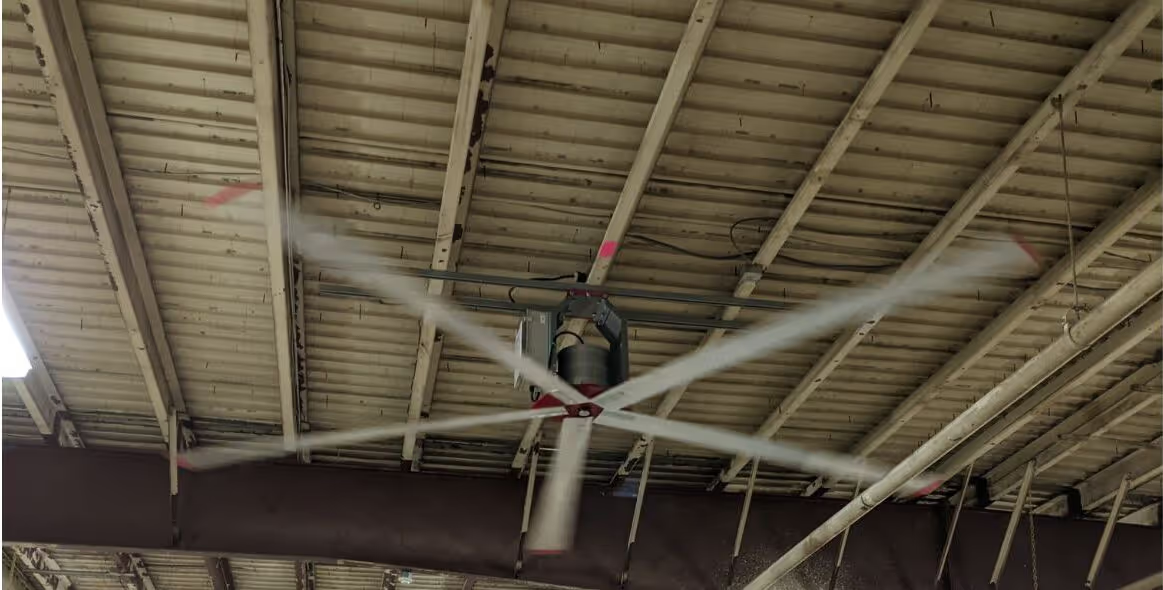
For large spaces, big ceiling fans—HVLS fans—are often better because they move more air at lower speeds, improve comfort, and can reduce energy costs—often replacing multiple smaller fans and complementing existing HVAC systems.
Quick Takeaways
- HVLS = High Volume, Low Speed: Moves a lot of air efficiently without the “wind tunnel” feel.
- “Bigger is better” (in big spaces): One large fan can replace several small fans and help lower energy costs; some companies recoup HVLS investment in ~1 year (varies by environment).
- Size range: Big fans ~120–360 in (10–30 ft); small fans ~29–54 in (2.4–4.5 ft).
- Quieter comfort: Large fans typically run ~39–61 dB vs. small fans that can reach ~80 dB.
- Fewer blades, smarter blades: Modern HVLS fans use 4–5 airfoil blades (down from 10) for efficient airflow.
- Materials matter: Extruded aluminum blades resist rust/corrosion, won’t warp, and are ideal for 6–30 ft fan diameters.
- Indoor & outdoor options: Choose outdoor-rated fans for damp areas; indoor (dry-rated) fans stay indoors.
- AmeriWind advantages: Direct-drive motors (lighter, quieter, no oil), US-assembled, and 2–15 year warranties when purchased via AmeriWind or authorized dealers.
Why Big Ceiling Fans (HVLS) Belong in Your Space
Keeping your space cool is essential for comfort and productivity. Large ceiling fans (HVLS) boost comfort and enhance HVAC efficiency by improving both heating and cooling effectiveness. Even if you already have HVAC, HVLS fans work alongside it to circulate conditioned air more evenly from day one.
What Size Is a “Big” Ceiling Fan?
Big ceiling fans: typically 120–360 inches in diameter (10–30 ft).
Smaller fans: often 29–54 inches (2.4–4.5 ft).
Because size affects airflow, performance can vary significantly across this range.
Are Big Ceiling Fans Better?
Short answer: In large, open areas—yes.
Why bigger helps:
- Greater coverage & reach: A large fan moves air more efficiently and creates a strong breeze that travels farther than multiple small, high-speed fans.
- Energy savings potential: One HVLS fan can replace several smaller fans, often reducing energy use. Many companies recover their HVLS investment in about a year, though actual ROI varies with conditions.
- Comfort without a gale: HVLS fans run at low RPMs, so you don’t feel like you’re in a wind tunnel—yet they still move a lot of air while using very little energy.
- Simpler system design: You can often achieve the same circulation with fewer large fans than many small ones.
How Many Blades Do HVLS Fans Have?
Modern large ceiling fans typically feature 4–5 blades—not the 10 used historically. Advances in airfoil blade design (think airplane wings) mean fewer blades can deliver equal or better airflow.
Choosing the Right Fan Size for Your Room
Start with square footage: length × width.
Example: 8 ft × 10 ft = 80 sq ft.
Also consider layout and obstructions—large, open areas benefit most from larger diameters so air reaches corners and aisles.
Need more help on deciding the right fan size? Check out our guide on deciding the right fan size for your room.
Are Large Ceiling Fans Quieter?
Generally, yes. Big fans typically operate around 39–61 dB, while smaller, high-speed fans can reach ~80 dB.
AmeriWind noise advantages:
- Direct-drive motors for quieter, smoother operation.
- Lightweight design reduces vibration.
- No gearbox oil (and thus no leaks) and minimal maintenance.
Installation matters: Proper installation is critical to performance and noise reduction. Follow manufacturer guidelines. For bigger facilities or multi-fan setups, professional installation is often available—AmeriWind can help.
Do Blade Design and Materials Matter?
Absolutely. Blade shape and material significantly influence airflow and durability.
Materials you’ll see: pressboard, wood, extruded aluminum, premium plastics.
Best pick for large fans (6–30 ft): Extruded aluminum—it’s lightweight, rust/corrosion-resistant, and won’t warp in heat.
Why HVLS blade profiles work:
- Airfoil geometry (like an airplane wing) with a thicker leading edge and thinner trailing edge.
- Produces a rounded column of air that flows downward, hits the floor, and spreads in all directions for even coverage.
- Anodized finishes help reduce dust buildup and resist oxidation, enhancing blade longevity.
Are There Ceiling Fans Built for Outdoors?
Yes—outdoor-rated fans are made to handle the elements while keeping patios and open-air areas comfortable (and can keep bugs at bay with steady airflow).
How Big Should an Outdoor Ceiling Fan Be?
For commercial outdoor spaces (e.g., restaurant patios), err larger for better coverage. A larger blade span circulates air across wider areas, often replacing several smaller fans and helping you control electricity costs.
What Does “Outdoor-Rated” Mean?
- Outdoor-rated (damp): Designed for damp areas, with corrosion- and rust-resistant finishes and materials. AmeriWind offers outdoor-rated options suited to these environments.
- Indoor (dry-rated): For indoor use only—keep them out of damp conditions. AmeriWind also offers indoor models.
Caring for Outdoor Fans
Maintenance is straightforward—especially with AmeriWind’s extruded aluminum construction:
- Resists corrosion and won’t warp.
- Lightweight blades reduce motor strain, supporting longer service life.
Do Large Ceiling Fans Have Warranties?
Typical mechanical/electrical warranties run ~5–15 years; some brands offer lifetime coverage. Installation warranties may be 1–3 years.
AmeriWind warranty: 2–15 years (model-dependent). To keep your warranty valid:
- Purchase directly from AmeriWind or an authorized dealer.
- Follow our installation instructions or use an approved technician/licensed electrical contractor.
FAQs (Good for Featured Snippets)
Are big ceiling fans better?
For large spaces, yes. They move more air at lower speeds, often replace multiple small fans, reduce energy use, and improve comfort—without a harsh wind-tunnel feel.
What sizes do big ceiling fans come in?
Typically 120–360 inches (10–30 ft). Smaller fans are usually 29–54 inches (2.4–4.5 ft).
How many blades should an HVLS fan have?
Modern designs use 4–5 airfoil blades (down from 10 historically) thanks to better blade engineering.
Are large ceiling fans quieter than small fans?
Generally yes—around 39–61 dB, while small fans can reach ~80 dB. Direct-drive models from AmeriWind are especially quiet and low-maintenance.
Can I use a large ceiling fan outdoors?
Yes—choose outdoor-rated (e.g., damp-rated) models with corrosion-resistant finishes. Select larger diameters for wide-area coverage on patios.
What materials are best for big fan blades?
Extruded aluminum is ideal: lightweight, corrosion-resistant, and won’t warp—perfect for 6–30 ft fans.
What warranty should I expect for an HVLS fan?
Commonly 5–15 years on mechanical/electrical parts (some lifetime). AmeriWind offers 2–15 years depending on the model, with additional installation coverage in many cases.
Where Can I Buy the Best HVLS Fan?
If you’re ready to upgrade comfort and save energy, a large HVLS ceiling fan is a proven solution. AmeriWind offers high-efficiency, US-assembled large ceiling fans built by a team that’s passionate about performance and reliability. You can trust our brand and our commitment to excellence.
Talk to us today to size your space, plan placement, and coordinate installation.