

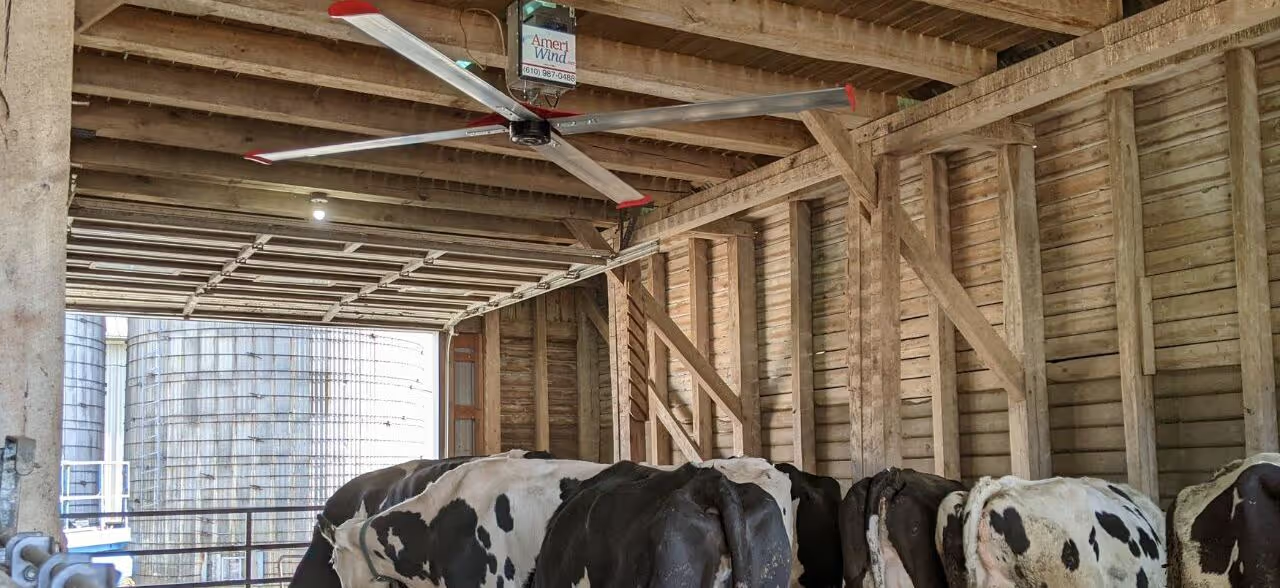
Keeping large commercial and industrial spaces comfortable year-round is no small task. Many facility managers rely heavily on traditional HVAC systems, but High Volume, Low Speed (HVLS) fans offer a compelling alternative—or complement—that can significantly reduce energy costs and improve comfort. In this article, we’ll compare HVLS fans and traditional HVAC systems in terms of cost, efficiency, comfort, and long-term benefits to help you make the best choice for your facility.
What Are HVLS Fans and How Do They Work?
HVLS fans are massive ceiling fans designed to move large volumes of air slowly and efficiently. Unlike traditional HVAC systems that condition the air, HVLS fans circulate existing air, creating a consistent temperature throughout a space. They don’t replace HVAC entirely but often reduce the load on heating and cooling systems, especially in large, open environments like warehouses, factories, gyms, and barns.
Initial Installation Costs
HVAC Systems
Installing a full HVAC system can be expensive, especially in large buildings. Costs typically include:
- Ductwork and insulation
- Large rooftop or packaged units
- Electrical and control systems
- Ongoing maintenance contracts
For large spaces, initial costs can range from tens to hundreds of thousands of dollars, depending on the building’s size and complexity.
HVLS Fans
A single HVLS fan can cover over 20,000 square feet, meaning you need fewer units. Installation is straightforward, often requiring only a mounting structure, VFD, and basic wiring. For most industrial spaces, HVLS fan installations are a fraction of the cost of full HVAC systems.
Energy Efficiency and Operating Costs
HVAC Systems
While HVAC systems condition air, they are energy-intensive—especially in facilities with high ceilings or poor insulation. The more air you need to cool or heat, the harder the system has to work.
HVLS Fans
HVLS fans consume very little power relative to their coverage. In cooling seasons, they provide a perceived temperature drop of 6–8°F, reducing the load on your AC. In winter, they destratify warm air trapped at the ceiling, keeping heat down where people are and reducing heater usage.
Over time, businesses can save 30–50% on energy costs by supplementing or downsizing HVAC systems with HVLS fans.
Comfort and Air Distribution
HVAC Systems
HVAC systems often struggle with hot and cold spots, especially in large buildings. Ducts may not reach every area equally, and rising heat can leave floor-level workers uncomfortable.
HVLS Fans
By moving large volumes of air, HVLS fans create even airflow from ceiling to floor. The gentle breeze also helps control humidity and odor, improving indoor air quality and employee comfort.
Maintenance and Longevity
HVAC systems require routine filter changes, duct cleaning, refrigerant checks, and more. Failures can be costly and disruptive.
HVLS fans, on the other hand, are low-maintenance by design. With fewer moving parts and no filters or compressors, they often require little more than periodic inspections and basic cleaning.
Key Takeaways
If you’re looking for ways to cut energy costs and improve comfort, HVLS fans are a smart investment—either as a standalone solution in mild climates or a supplement to HVAC systems in more demanding environments. They’re more affordable to install, cheaper to run, and require less maintenance than traditional HVAC.
Ready to Lower Your Energy Bills?
AmeriWind’s high-efficiency HVLS fans are designed to reduce your facility’s heating and cooling costs without sacrificing comfort. Reach out today to learn how we can help you integrate HVLS fans into your space and save money all year long.