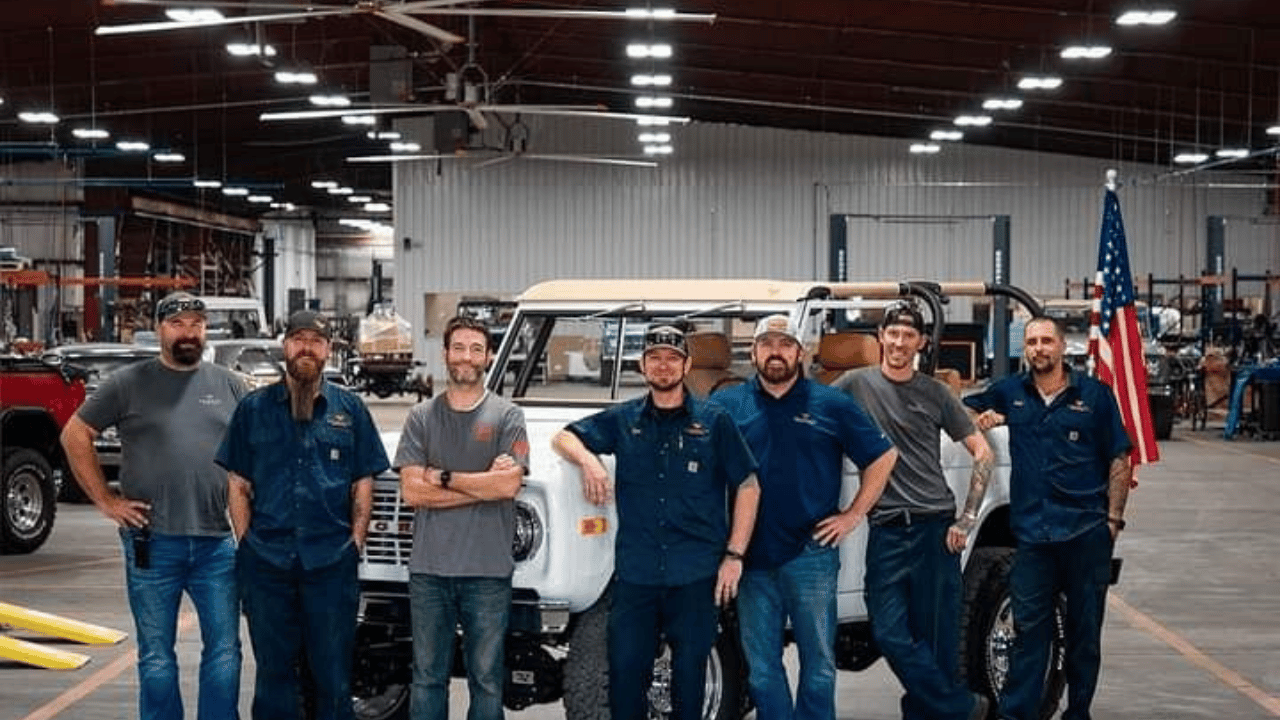

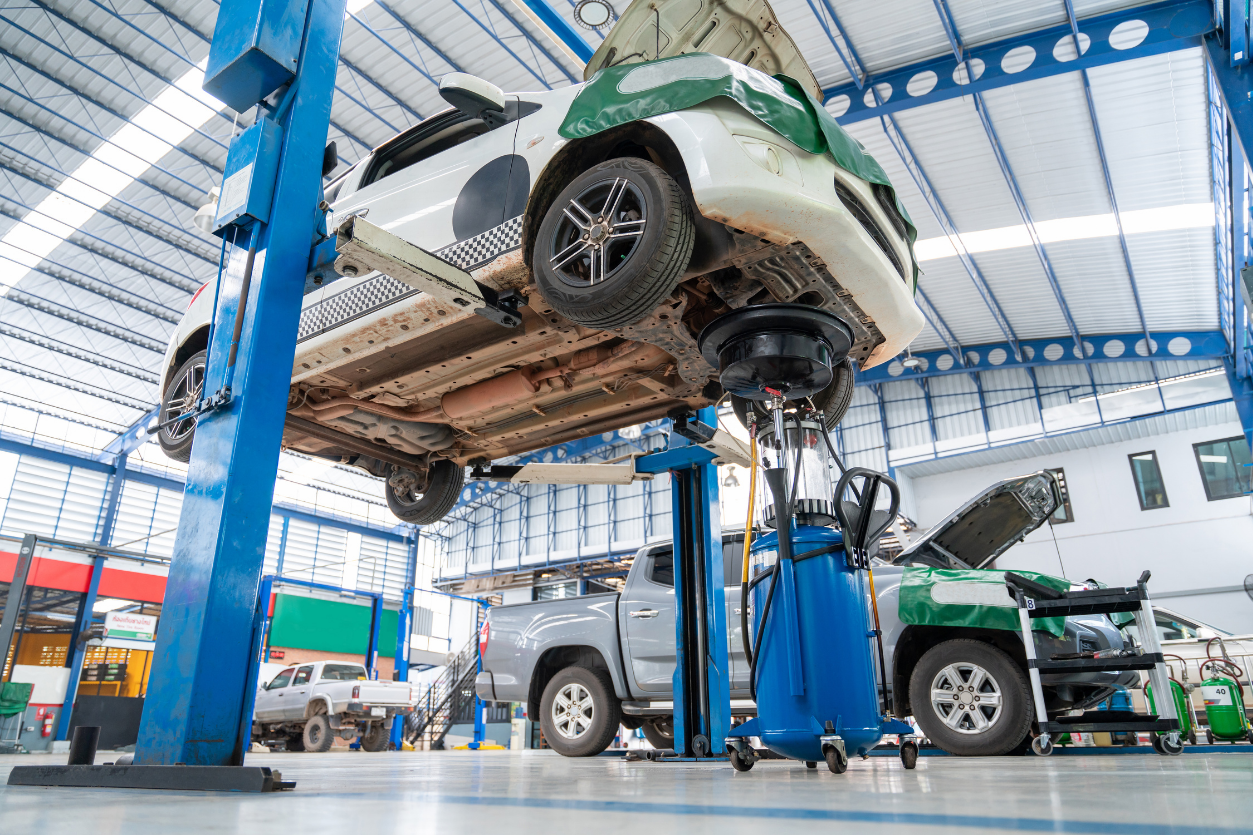
Auto repair shops are some of the toughest buildings to keep comfortable. Bay doors open and close constantly. Lifts, compressors, and exhaust systems generate heat. Fumes and dust hang in the air. And the people working in the space are usually moving between vehicles all day, which means whatever airflow exists has to actually reach the floor.
That’s where HVLS fans tend to make a noticeable difference.
The Problem Isn’t Just Heat
Most shop owners think of summer heat as the main reason to add airflow, and it’s a real one. Working under a lift or inside an engine bay in 90-degree weather wears people out fast. But heat is only part of the picture.
Air quality is just as important. Exhaust, brake dust, oil mist, and cleaning chemicals all end up in the air. When the air isn’t moving, those contaminants settle into pockets around the bays. That affects how the shop smells, how clean the equipment stays, and how comfortable people feel by the end of a long day.
What HVLS Fans Actually Do in a Shop
HVLS fans move large volumes of air at low speeds. In a shop, that means consistent air movement across the whole floor without creating a wind tunnel that scatters paperwork or kicks up dust. The slow, steady movement helps in a few specific ways.
It pushes hot air away from work zones during summer. It mixes warm ceiling air down toward the floor in winter, which makes the shop feel warmer without running the heater harder. And it keeps fumes and dust from settling into stagnant pockets, which improves both comfort and air quality.
Fitting Around Lifts and Equipment
One concern shop owners often raise is clearance. With lifts, hoists, and tall vehicles, ceiling space matters. HVLS fans need a certain amount of room above and below to work properly, but most shops have more usable ceiling height than people realize.
In buildings with tight ceilings, smaller diameter fans or strategic placement away from the highest lift positions usually solves the problem. The key is planning the layout around the equipment that’s already there rather than treating the ceiling as empty space.
Year-Round Value
A lot of shops install HVLS fans for summer cooling and end up running them most of the year. In winter, reversing the fan or running it at a low speed pushes warm air down from the ceiling, which can cut heating run time. In shoulder seasons, steady airflow keeps the shop comfortable when bay doors are opening and closing throughout the day.
That year-round usefulness is usually what makes the investment pencil out. The fan isn’t sitting idle nine months out of the year—it’s working every day the shop is open.
Worth a Look If the Shop Feels Stuffy
If the shop tends to feel hot in summer, stuffy in winter, or just generally heavy with fumes, airflow is usually the missing piece. AmeriWind works with shop owners to size fans around the actual building—bay count, ceiling height, and equipment layout—so the result fits the way the shop runs.