Family Made In Oley, PA



 Agriculture
 Industrial
 Sports and events
 Shops and garages

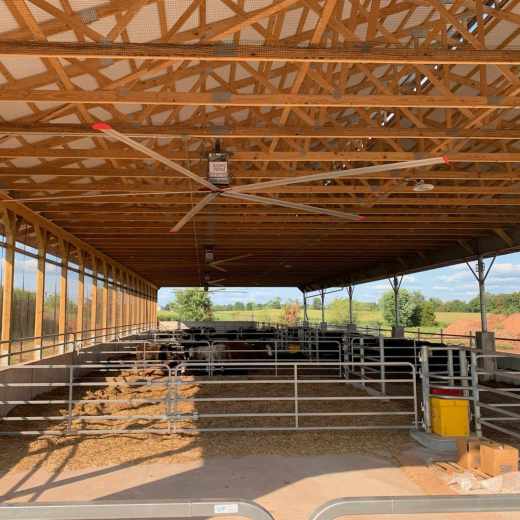
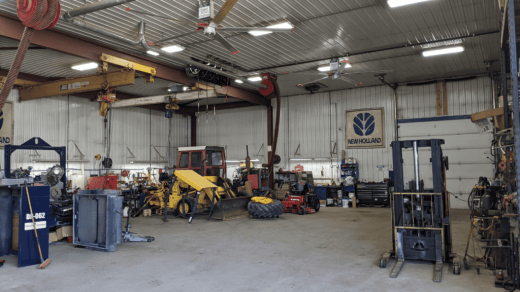
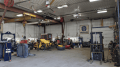
Big shops, pole barns, and large garages don’t get the same airflow attention as commercial warehouses, but they probably should. These are spaces where people spend hours working, equipment generates heat, and the ceilings are usually too high for a regular ceiling fan to do much. A properly sized HVLS fan changes the whole feel of these buildings. The trick is picking the right size for the space you actually have.
Why Standard Ceiling Fans Don’t Cut It
A typical ceiling fan is designed for a residential room with 8-foot or 9-foot ceilings. The blades spin fast and move a small volume of air across a small area. In a 40-by-60 pole barn with 16-foot sidewalls, that fan might as well not exist. The air it moves can’t reach the floor, and even if it could, it’s covering a fraction of the space.
That’s why workshops and large garages end up stuffy in summer and freezing cold at the floor in winter even with fans running. The fans aren’t matched to the space.
What Changes With HVLS
HVLS fans move large volumes of air at slow, steady speeds. In a shop or pole barn, that means air reaches the floor consistently across a wide area. The space feels cooler in summer because the airflow helps sweat evaporate, and warmer in winter because the fan pushes stratified warm air back down from the ceiling.
For anyone spending real hours in these buildings—working on cars, woodworking, running a small manufacturing operation, or just using the space heavily—that’s a noticeable quality-of-life upgrade.
Sizing for Common Shop and Garage Dimensions
A few common building sizes come up over and over.
A 24-by-24 or 30-by-30 shop (around 600 to 900 square feet) usually works well with a single 8-to-10-foot HVLS fan. That size covers the floor well without being overkill for the space.
A 30-by-40 or 40-by-40 pole barn (1,200 to 1,600 square feet) typically calls for a 10-to-14-foot fan. The jump up in diameter matches the larger footprint and keeps airflow reaching all corners.
A larger 40-by-60 or 50-by-80 pole barn (2,400 to 4,000 square feet) usually needs a 16-to-20-foot fan, or in some cases two smaller fans spaced along the length of the building. Shape matters here—long, narrow buildings benefit from multiple fans more than square ones.
For buildings over 5,000 square feet, the layout starts to look more like a commercial warehouse, with multiple fans sized to the specific dimensions.
Ceiling Height Matters as Much as Floor Area
HVLS fans need enough vertical space to work properly. Most need at least 12 feet of ceiling clearance, with the sweet spot in the 14-to-20-foot range. Below 12 feet, smaller diameter fans or lower-profile designs usually fit better.
Pole barns and shops with cathedral ceilings can accommodate larger fans than their footprint would suggest. Flat-ceilinged garages with 10-to-12-foot ceilings call for careful sizing to leave safe clearance below the blades.
Mounting and Installation Considerations
How the fan mounts depends on the building. Pole barns typically mount to a purlin or cross-brace with the right bracket. Shops with exposed rafters can use I-beam or beam-mount setups. Lower-ceilinged garages sometimes need shorter down-rods to keep clearance above head height and vehicle lifts.
Most of these buildings have more mounting options than people realize, which is part of why a conversation about the actual building usually produces a better answer than guessing from a catalog.
See It on Video
Right-Sized Fans for the Actual Building
The biggest mistake with shop and garage fans is going too small to save money upfront. An undersized fan doesn’t cover the floor, which means the building still feels uncomfortable—and the fan just gets ignored. AmeriWind works with shop and pole barn owners to match fan size to the actual space, so the fan does what it’s supposed to and keeps doing it for years.