

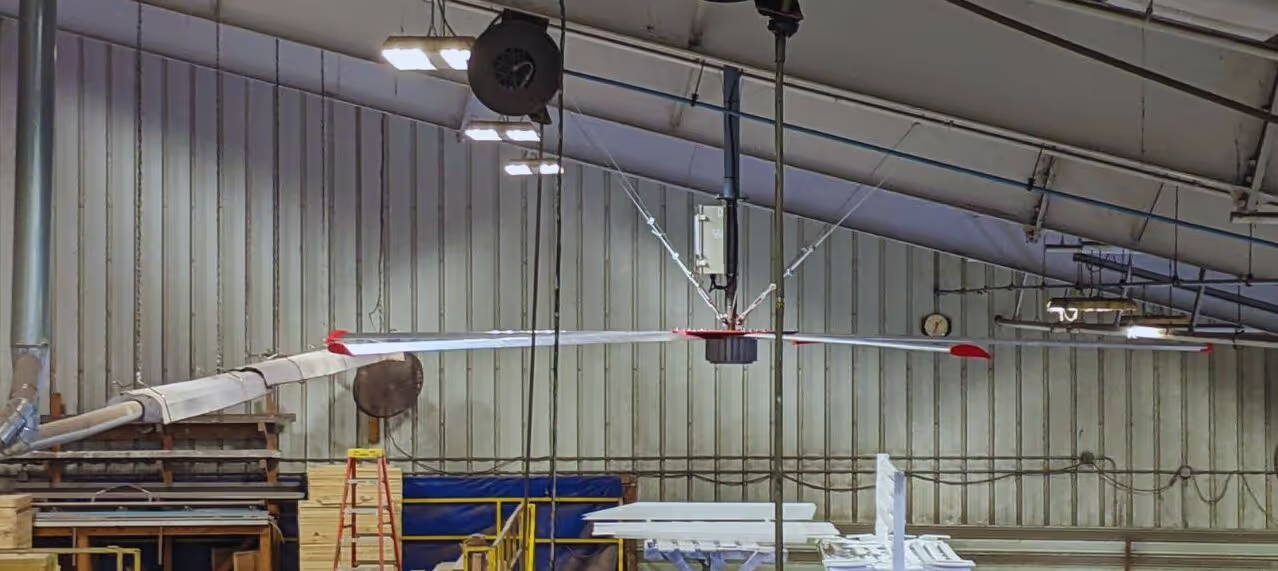
The most important thing is to keep you and your employees safe around the rotating blades of industrial fans. Beyond obvious blade hazards, there are several additional risks to consider in warehouses, factories, and distribution centers. In this guide, we cover six problems with using fans—and practical fixes to keep your workplace safe.
Quick Takeaways
- Keep distance from blades: Mount HVLS ceiling fans high and set sensible speeds to minimize debris-in-eye incidents, balance loss, and contact injuries.
- Coordinate with sprinklers: Follow spacing rules and enable auto-shutoff on water-flow per NFPA 72 to keep fire protection effective.
- Inspect for loose/damaged parts: Shipping and installation can loosen components; verify hardware and connections before startup.
- Reduce projectile risks: Floor fans/blowers are closer to hazards; HVLS ceiling fans are elevated and typically safer.
- Install correctly: Use manufacturer-supplied safety gear (retainer links, safety cables, guy wires) and follow the manual—consider pro installation.
- Maintain & monitor: Routine checks, networked controls, and gearless/direct-drive monitoring improve safety and reduce downtime.
1) Close Proximity to Rotating Blades
Risks
- The wind can carry dust or debris, which is harmful—especially to eyes.
- Forceful gusts can throw people off balance and cause accidents.
- Direct contact with blades can cause serious injuries.
What to do
- Mount large industrial ceiling fans high on the ceiling; treat floor fans and high-velocity blowers differently.
- Run HVLS fans at a relatively slow speed—they move plenty of air without going “full blast.”
- This reduces the likelihood of debris in eyes, wind-related mishaps, and direct blade contact injuries.
2) Industrial Ceiling Fan Integration with Sprinkler Systems
Large industrial ceiling fans are common in warehouses and distribution centers. Additional safety measures—like sprinkler systems—are often installed as part of a hazard assessment to protect the entire structure. Sprinklers are essential for fire prevention but must be considered when choosing location and size for fans.
Installing HVLS fans near fire sprinkler systems (key rules)
- Max fan diameter: 24 ft (7.3 m).
- Placement: Center the HVLS fan in the square formed by four sprinklers.
- Vertical clearance: Keep ≥ 3 ft (0.9 m) of space between the HVLS fan and the sprinkler deflector.
- Controls: Ensure all HVLS fans are networked and shut off immediately upon a water-flow signal from the alarm system, per National Fire Protection Association (NFPA) 72.
3) Dislodged Parts or Components
Some parts of a large industrial ceiling fan may become dislodged during installation. Long-distance transport can expose parts to vibration, bumps, and extreme weather, leading to loose or damaged components.
Why it matters
- Damaged or missing parts pose safety risks and cause operational problems.
What to do
- Perform a receiving and pre-start inspection (hardware torque, mounts, electrical, controls).
- For gearless fans, onboard sensors track real-time performance data and make instantaneous power adjustments—helping reduce repairs and maintenance costs.
- If anything is loose or damaged, repair/replace before energizing the unit.
4) Projectile Injuries
Floor fans and industrial blowers are more likely to have foreign objects fly into their blades due to their low height and proximity to materials. This can create projectiles that injure people or damage property.
Why HVLS Help Reduce Projectile Injuries
Because of their elevated placement, HVLS ceiling fans are well out of reach for most debris, reducing the chance of objects contacting blades and becoming projectiles.
5) Good Installation Practices for Additional Safety
When installing any fan, follow the manufacturer’s directions. Many manufacturers and distributors offer professional installation services, which is especially helpful for larger buildings requiring multiple fans. If you need help, AmeriWind can handle setup.
Use all supplied safety equipment
- Blade retainer links
- Safety cables
- Mounting hardware with guy wires
- Ensure wiring is routed and secured safely and effectively.
Know the rules & clearances
- Installation requires knowledge of applicable building codes/regulations and strict adherence to the installation manual.
- Verify clearances to structural members, sprinklers, racking, lighting, and doors.
- Commission the system: balance, speed limits, and emergency stop behavior.
6) Maintenance & Controls (Often Overlooked)
Even durable industrial fans need periodic inspection and control checks to stay safe and efficient.
Best practices For HVLS Fan Maintenance
- Create a PM schedule (visual checks, torque verification, electrical connections, controller diagnostics).
- Network fans to building systems for alarm-driven shutdowns (e.g., water-flow) and performance monitoring.
- Use lockout/tagout (LOTO) during service and train staff on start/stop and emergency procedures.
- Keep records of inspections and any component replacements.
Want to learn more about HVLS fan maintenance? Check out our guide.
FAQs: Industrial Fan Safety
Are HVLS fans safe to use near fire sprinklers?
Yes—if you follow spacing and control rules: max 24 ft diameter, centered among four sprinklers, ≥3 ft below deflectors, and configure immediate shutdown on water-flow per NFPA 72.
What’s the safest speed for HVLS fans?
Lower speeds typically provide broad, gentle airflow. Size the fan correctly, then run at the lowest effective RPM to reduce debris movement and noise.
Are floor fans riskier than ceiling fans?
Often, yes. Floor fans sit near debris and materials, increasing projectile risk. Elevated HVLS ceiling fans mitigate this.
How do I prevent parts from loosening after shipping?
Perform receiving inspections, verify torque, and re-check after the first run-in period. Gearless/direct-drive systems with monitoring can help detect issues early.
Industrial fan safety isn’t complicated—it’s consistent. Keep people away from rotating blades with high mounting and sensible speeds, integrate HVLS fans correctly with sprinklers (max 24 ft diameter, centered among four heads, ≥3 ft below deflectors, and auto-shutoff on water-flow per NFPA 72), verify hardware so nothing loosens, reduce projectile risk by elevating airflow, install using all supplied safety equipment, and maintain fans with a clear PM schedule and proper controls.
Treat your HVLS systems like the industrial machinery they are: commission them, train your team (including LOTO), and document procedures. Do that, and you’ll get the comfort, energy savings, and uptime you want—without compromising safety. If you’d like help with layout, code compliance, or integration, AmeriWind can size your space, coordinate with fire protection/BMS, and handle professional installation.